
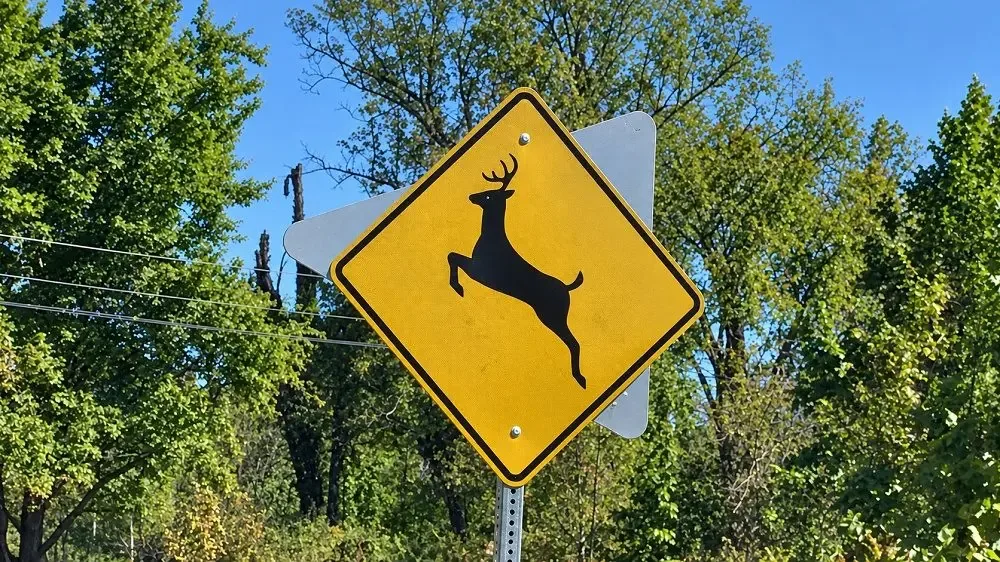
FRANKFORT, KY — Drivers across Kentucky are being urged to slow down, stay alert and buckle up as deer activity picks up and collision totals reach their highest level in seven years. Team Kentucky says the state recorded 3,411 deer-related crashes in 2025, a number officials say underscores the need for caution on rural roads and in areas where deer are commonly seen.
The latest figures show no deaths in deer crashes this year, but 30 people were seriously injured. State transportation officials say the risk is especially serious in the fall, when deer movement increases and the chances of a roadside encounter rise sharply.
Hopkins County recorded the most deer collisions in Kentucky
Hopkins County led the state with 134 reported deer crashes in 2025, according to Team Kentucky and the Kentucky Transportation Cabinet. Hardin County had the second-highest total at 118.
Muhenberg and Nelson counties each recorded 95 crashes, while Boone County reported 94. State officials say several western Kentucky counties have continued to rank near the top in recent years, showing a pattern that has remained consistent over time.
That concentration matters because it gives transportation officials and local drivers a clearer picture of where extra caution may be needed. The collision totals also help identify where warning signs and other safety steps may be most useful.
Deer crashes have risen every year since 2020
Officials say deer-related crashes have climbed every year since 2020, rising more than 18% over the past five years. The 2025 total is the highest Kentucky has seen in seven years, continuing a steady upward trend that transportation officials are watching closely.
The increase reflects more than just one bad season. State officials point to a longer pattern of growing deer-vehicle collisions, suggesting the issue has become a persistent roadway safety concern rather than an isolated spike.
Because the numbers have moved upward year after year, transportation planners are treating the problem as an ongoing one. Drivers are being asked to adjust their habits now, especially in places and at times when deer are more likely to cross roads.
Fall months and evening commutes bring the highest risk
Nearly half of Kentucky’s deer crashes happened in October, November and December, with November posting the highest monthly total at 823 reported collisions. Officials say that seasonal rise is tied to several factors, including mating season, changing food sources, harvested crops and less cover for deer.
Crash timing is also a major concern. The highest numbers came between 6 p.m. and 8 p.m., when daylight fades and traffic is still heavy enough to put more drivers on the road.
Transportation officials say the combination of seasonal deer movement and low-light driving conditions creates a dangerous window for motorists. They are encouraging drivers to be especially careful during evening hours in the months when deer activity is strongest.
State officials say drivers should brake steadily and never swerve
Team Kentucky and the Kentucky Transportation Cabinet are telling drivers to slow down in areas where deer may be nearby, keep headlights on and avoid distractions by putting the phone away. Officials also remind motorists to wear a seat belt every time they drive.
If a deer runs into the road, the advice is to brake steadily and stay in the lane instead of swerving. Officials say a sudden swerve can lead to a more serious crash than the deer strike itself, putting drivers and passengers at greater risk.
That guidance is meant to reduce the severity of collisions when drivers have little time to react. Transportation officials say simple steps can make a difference, especially on roads where deer crossings are common and visibility is limited.
Crash reports help decide where warning signs may be needed
Drivers are also being asked to report deer-vehicle crashes to police. Officials say those reports are important because they help traffic engineers identify trouble spots and determine where safety changes may be warranted.
Information from crash reports can support decisions about warning signs, other roadway alerts and additional measures designed to reduce collisions. State officials say that kind of data is especially useful when a county repeatedly posts high deer-crash numbers.
For transportation workers, the goal is to match safety improvements to the locations where they are most needed. For drivers, the message is simpler: slow down, stay focused and expect deer to appear with little warning, particularly in the fall and during the evening commute.